Shin karate - 新空手
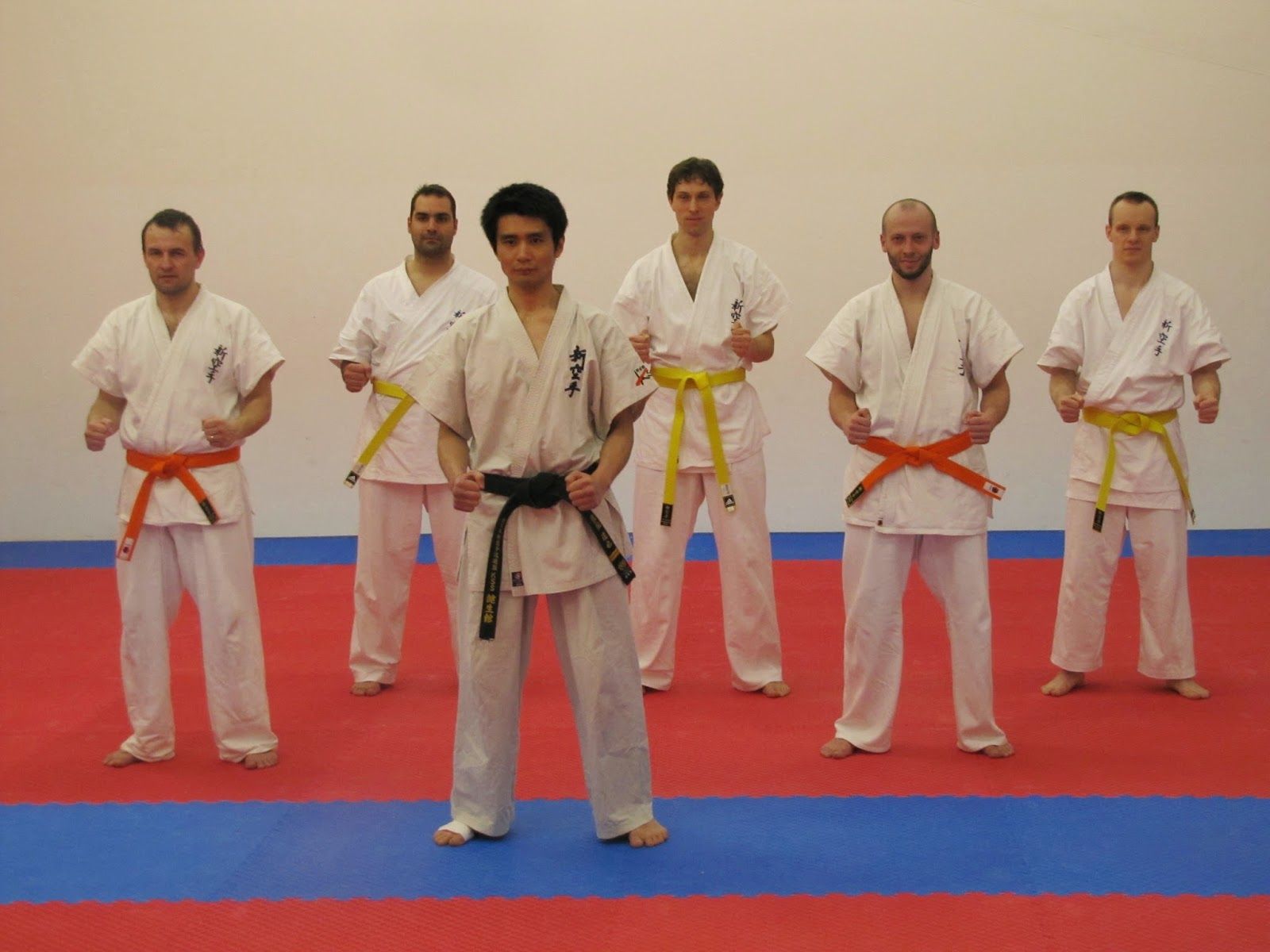
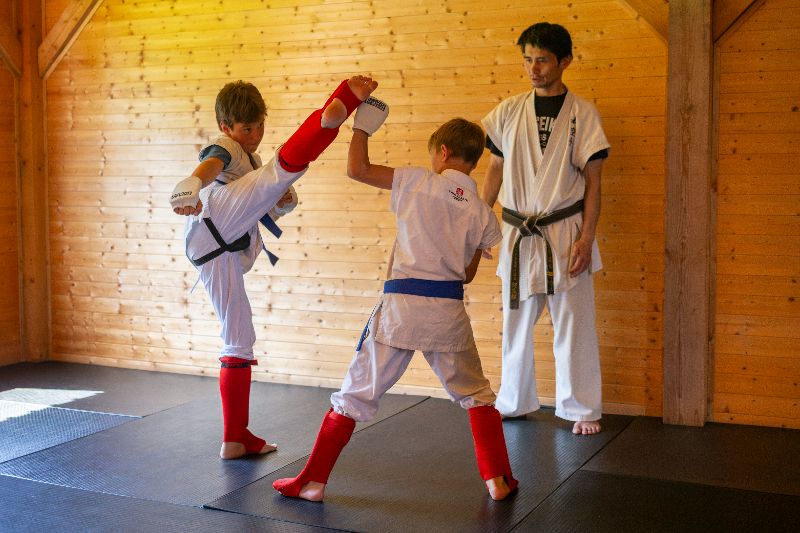
The kicks and punches delivered to the opponent do not stop and focus directly on the body, legs, head and face. The exception is shin karate for kids, where strikes to the head and face in combat are prohibited. Shin Karate differs from other styles of karate in that boxing gloves and a white sport kimono with short sleeves are used in combat.
The history of shin karate
The character shin in shin karate means "new". It thus concerns a so-called new karate, whose history though is older than 40 years. The first competitions in shin karate took place in 1985, but the association that organized it, chose the name shin karate about four years later. Shin Karate originated a bit unusually: several schools of karate and other full-contact disciplines organized competitions for which common rules of competition were chosen. The aim was to create a space where different styles of opponents could be compared according to the new uniform rules which allowed a real and effective combat exposure without significant restrictions. Competitors could attack freely all parts of the body (except for the genital) with kicks and punches. The shin karate competition gained such popularity that shin karate dojos later began to develop, where techniques in accordance with the rules of the competition were taught.
Development of Full-Contact Competition
In the early 1990s, Shin Karate continued to contribute to the development of full-contact martial arts competition in Japan.
In 1992, representatives of Shin Karate were involved in the organization of the TOWA CUP, an open-weight full-contact tournament that brought together fighters from different martial arts backgrounds. Special competition rules were developed for the event, making it an important milestone in the development of modern full-contact competition in Japan.
The experience gained through these events contributed to the further development of Shin Karate and its competition system. Over the following years, the rules and competition formats continued to evolve in response to changes in the martial arts environment.
Today, Shin Karate continues to be organized and developed in Japan under the NPO法人全日本新空手道連盟 (All Japan Shin Karate Federation), with competitions and training activities adapted to different age groups and levels.
Shin Karate Today
Today, Shin Karate continues to be practiced and developed in Japan as a full-contact martial art rooted in karate.
Training combines fundamental karate techniques such as punches, kicks, combinations and movement with partner practice and sparring. Depending on their age, experience and goals, students can train for physical fitness, martial arts development, self-defence or competition.
Shin Karate competitions and championships continue to be held in Japan under All Japan Shin Karate Federation. The rules and formats of competition have developed over the years, reflecting the continuing evolution of Shin Karate.
While its competition system has changed with the times, the essential character of Shin Karate remains the same: developing practical technique, physical ability and mental strength through full-contact training.
KSS Kenseikan JAPAN
KSS健生館 (KSS Kenseikan) was founded in Kyoto, Japan, in 1999 by Master Sakon Kubosaka.
Master Kubosaka began practicing martial arts from a young age and has experience in traditional karate, full-contact karate, kickboxing and boxing. He became a Japanese Shin Karate champion in 1999 and has continued to develop Shin Karate through his own training and teaching.
Today, Master Sakon Kubosaka is the head of KSS Kenseikan and the representative of All Japan Shin Karate Federation.
KSS Kenseikan operates and supports Shin Karate training at several dojos in Japan, including its main dojo in Kyoto and branches in other parts of the country. Its classes are open to children, teenagers and adults, with training adapted to different ages, experience levels and goals. The dojo also offers kickboxing and other forms of training alongside Shin Karate.
KSS Kenseikan places importance not only on developing martial arts technique and physical ability, but also on discipline, respect, confidence and personal development through training.
Here is a link to the web site of KSS Kenseikan JAPAN (Japanese only).
Kenseikan Czech – Our Story
Kenseikan Czech Shin Karate was established by Tatsuya Saeki, who began his martial arts training at KSS Kenseikan in Kyoto, Japan.
In the early years of KSS Kenseikan, when the organization was still relatively small, Saeki was invited by Master Sakon Kubosaka to become its first full-time instructor. At that time, KSS Kenseikan operated its main dojo in Senbon, as well as a dojo at Master Kubosaka's home in Kitayama, together with several affiliated branches.
As a full-time instructor, Saeki became involved in the development of KSS Kenseikan during an important period of its growth. He became a main instructor at the Katsura dojo near Hankyu Katsura Station, assisted Master Kubosaka in classes, and also provided individual training. He taught a wide range of students, including children, adults, women and competition-oriented fighters.
After moving to the Czech Republic, Saeki began teaching Shin Karate there in 2010. Since then, he has continued to develop Shin Karate in the Czech Republic while maintaining his connection with his teacher and KSS Kenseikan in Japan.
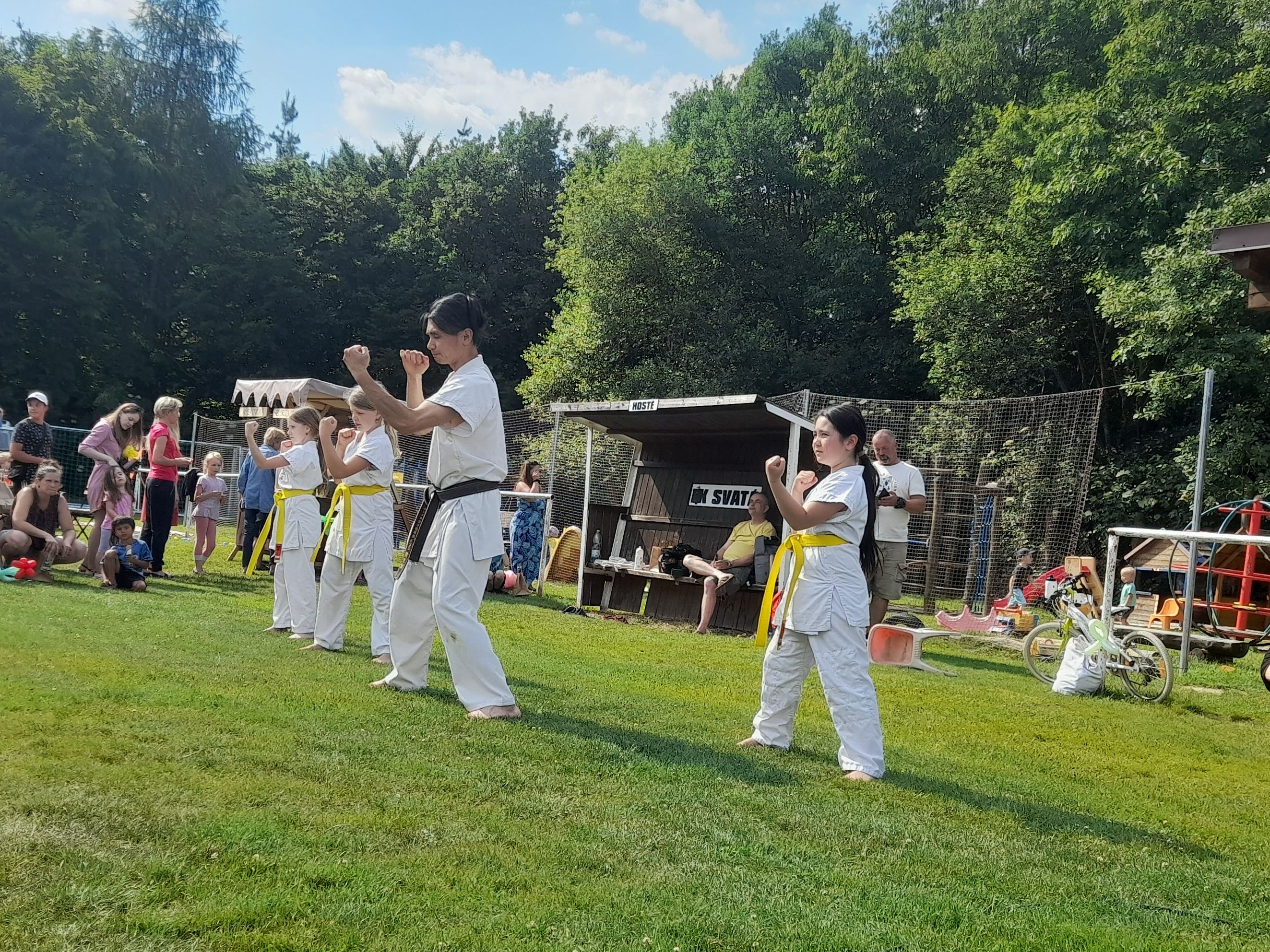
Today, Kenseikan Czech Shin Karate is the official overseas branch of KSS Kenseikan in the Czech Republic. Training is currently offered in Beroun and Svatá for children, teenagers and adults.
Our aim is to introduce Shin Karate to people in the Czech Republic while maintaining the technical and educational traditions of KSS Kenseikan and adapting them to the needs of students here.